
New York Harbor once held half the world’s oysters. By the early twentieth century, overharvesting, pollution, and dredging had reduced that population to a memory. Today a single oyster can filter up to 50 gallons of harbor water every day. Multiply that by one billion, and the waterway becomes less of a post-industrial channel and more of a working ecosystem.
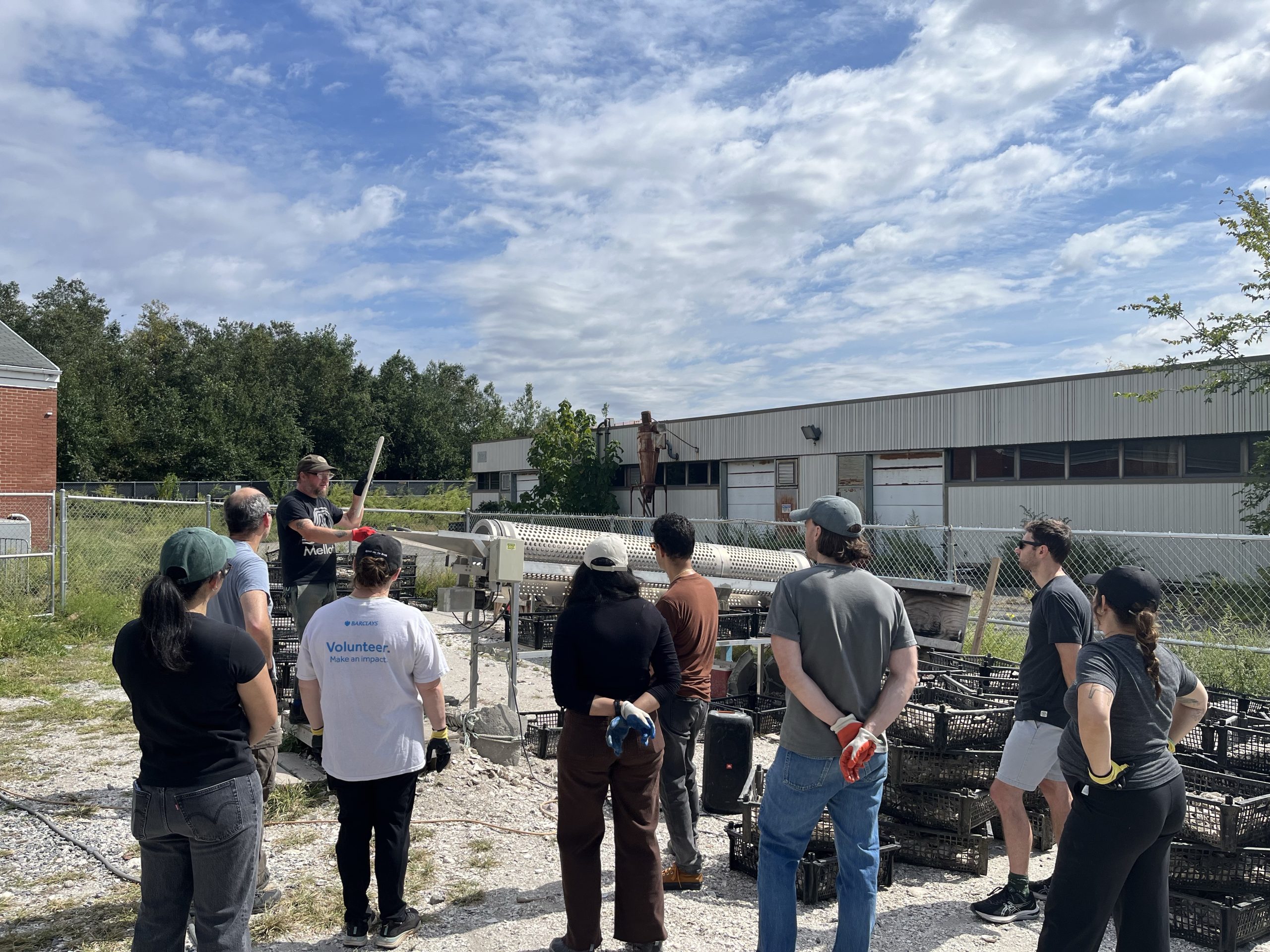
That is the premise behind the Billion Oyster Project, the 2026 Greenbuild Legacy Project. Ahead of the conference, Stephanie Beaumont represented BEE on a volunteer team of Host Committee members from green building and sustainability organizations across New York City. The group spent a morning working with the initiative in New York Harbor, helping restore the reefs that once buffered the city’s coastline and cleaned its water.
The Scale of the Work
The target is one billion oysters by 2030. Since 2014, volunteers and scientists have already placed 200 million oysters and rebuilt 19 acres of reef across five regions of the harbor. The effort is not decorative. Oyster reefs reduce wave energy, prevent shoreline erosion, and create habitat for fish, crabs, and other species. In a city where storm surge and combined sewer overflows are persistent risks, a restored reef is a working piece of coastal resilience.
Each adult oyster filters nitrogen, sediment, and algae from the water as it feeds. A rebuilt reef does the same at scale, improving clarity and supporting the broader estuary. The initiative also turns the harbor into a classroom, engaging students and volunteers in monitoring, reef construction, and data collection.
Why Building Engineers Should Care
BEE’s work usually happens inside buildings: commissioning, LEED and WELL certification, energy modeling, indoor air quality. But buildings do not sit in isolation. They sit in watersheds, on coastlines, and inside urban heat islands. The same professionals who specify low-carbon concrete and design high-performance envelopes are increasingly asked to think about how a site handles rain, heat, and stormwater.
The Billion Oyster Project shows what that broader view looks like in practice. It is a nature-based solution with measurable outcomes: oysters planted, acres of reef restored, gallons of water filtered daily. Those metrics are not so different from the performance targets BEE tracks for buildings. The difference is the asset class.
What We Did
As members of the Greenbuild 2026 Host Committee, the volunteer team joined other participants for a morning of reef work on the harbor. Stephanie represented BEE alongside professionals from other green building and sustainability organizations in New York City. The Host Committee is responsible for welcoming attendees, shaping the program, and connecting the conference’s themes to local environmental work. Greenbuild does this each year through a legacy project that outlasts the event. For 2026, that effort is the Billion Oyster Project, meaning this year’s host-city connection is a reef in New York Harbor.
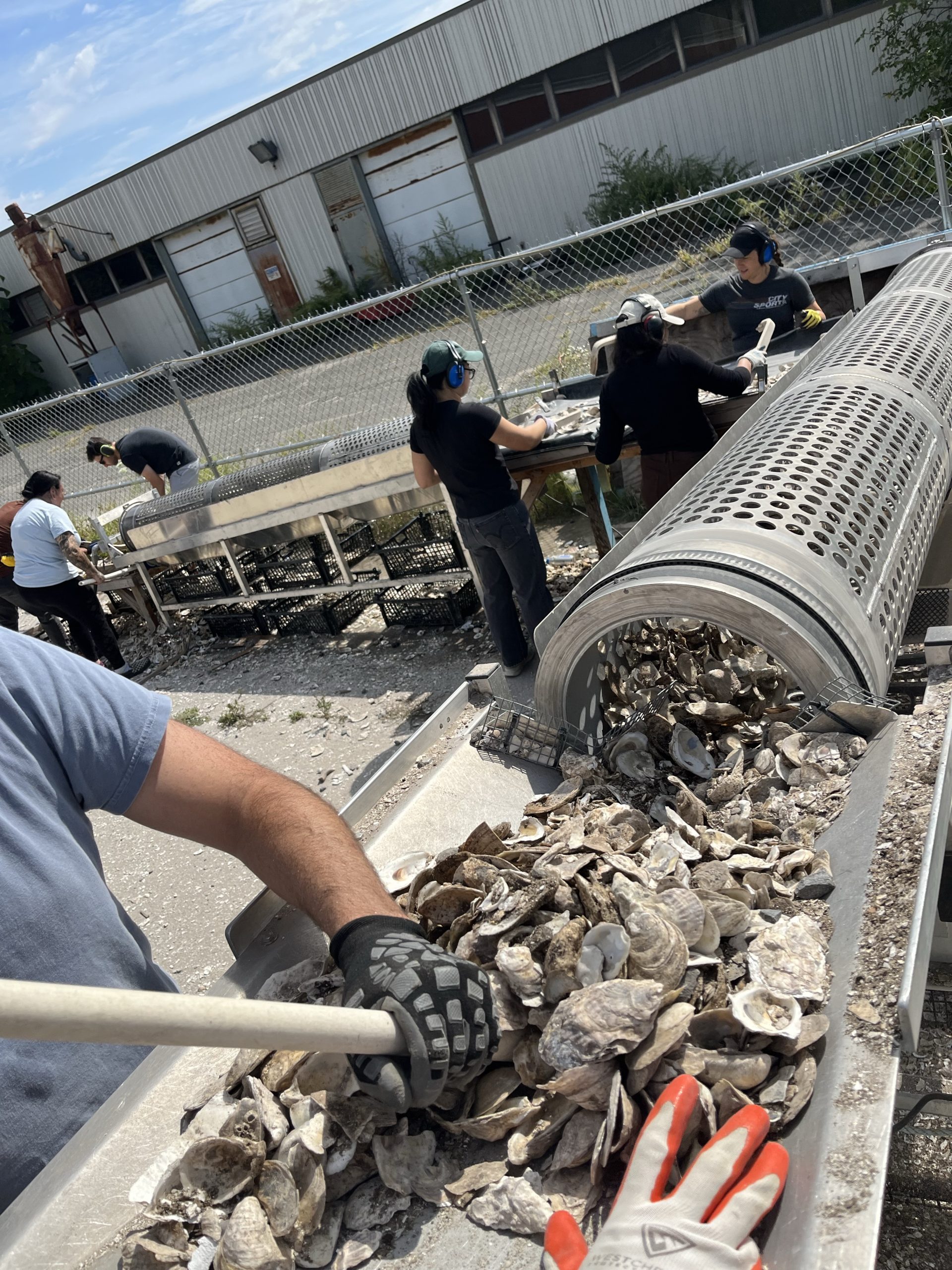
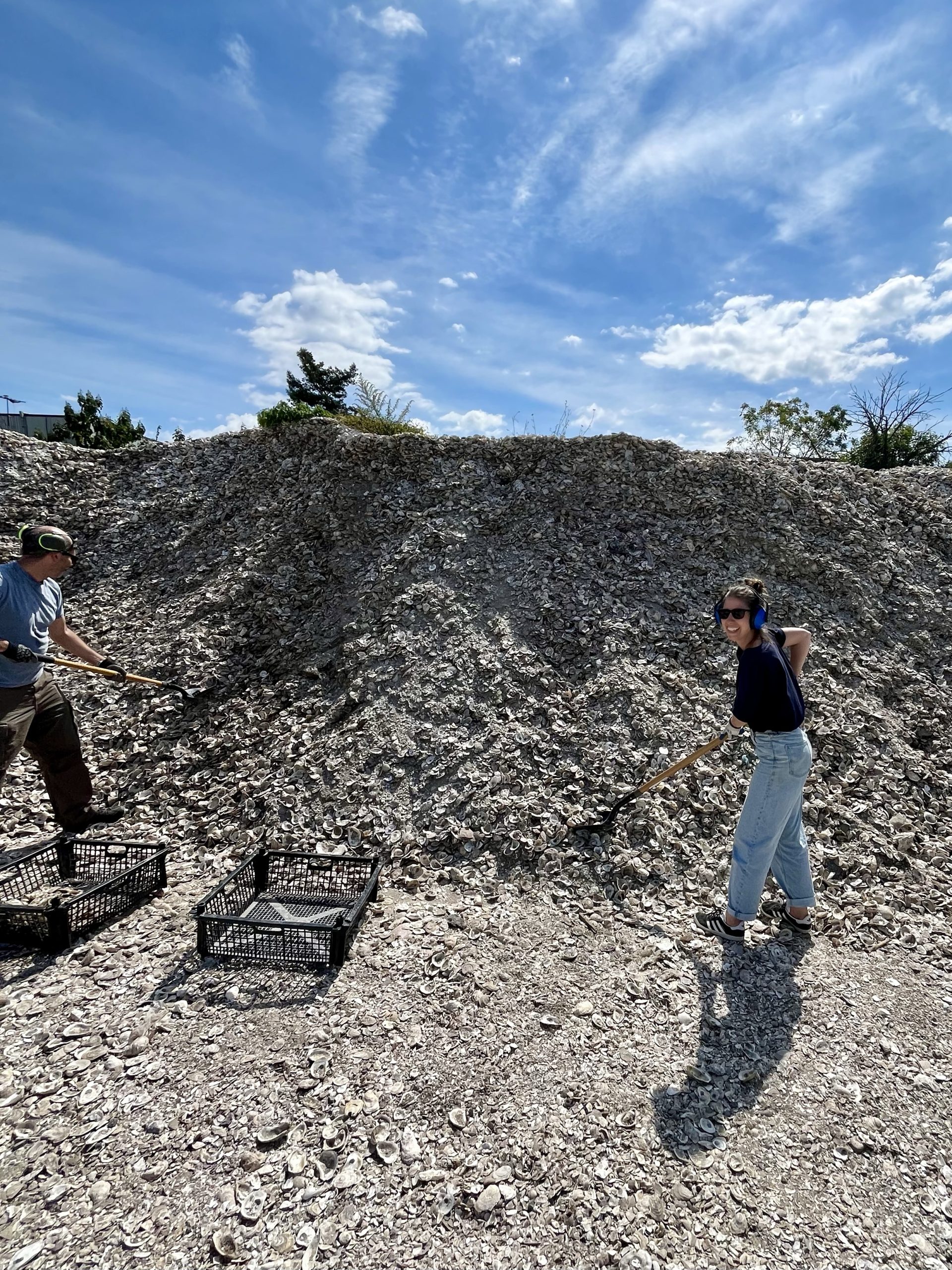
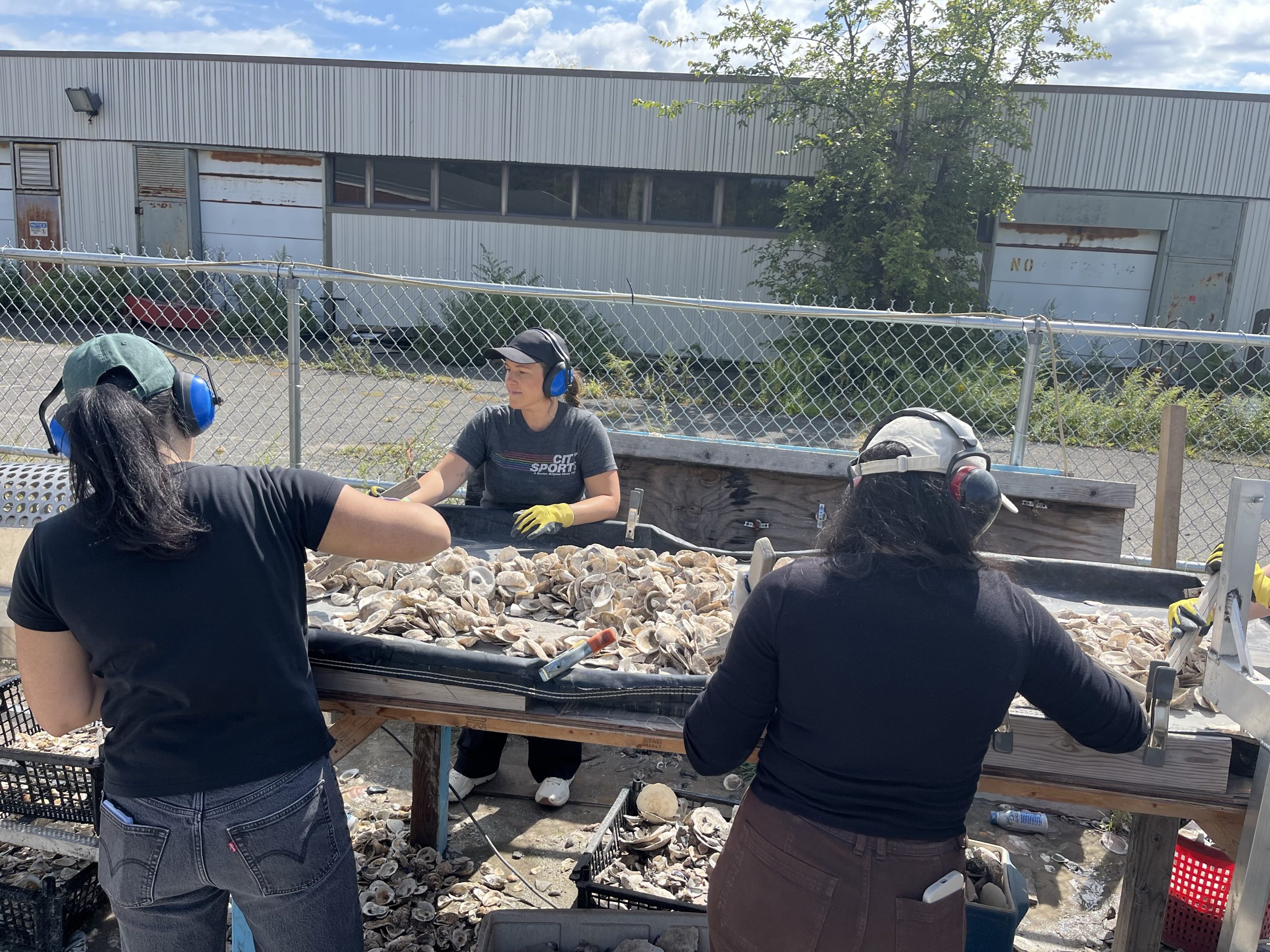
The activity was hands-on. The team handled oyster shells, prepared reef structures, and learned how the staff monitors growth and survival rates across the five restoration sites. They also heard the science behind reef placement: how oysters attach to substrate, and which conditions produce the strongest recruitment.
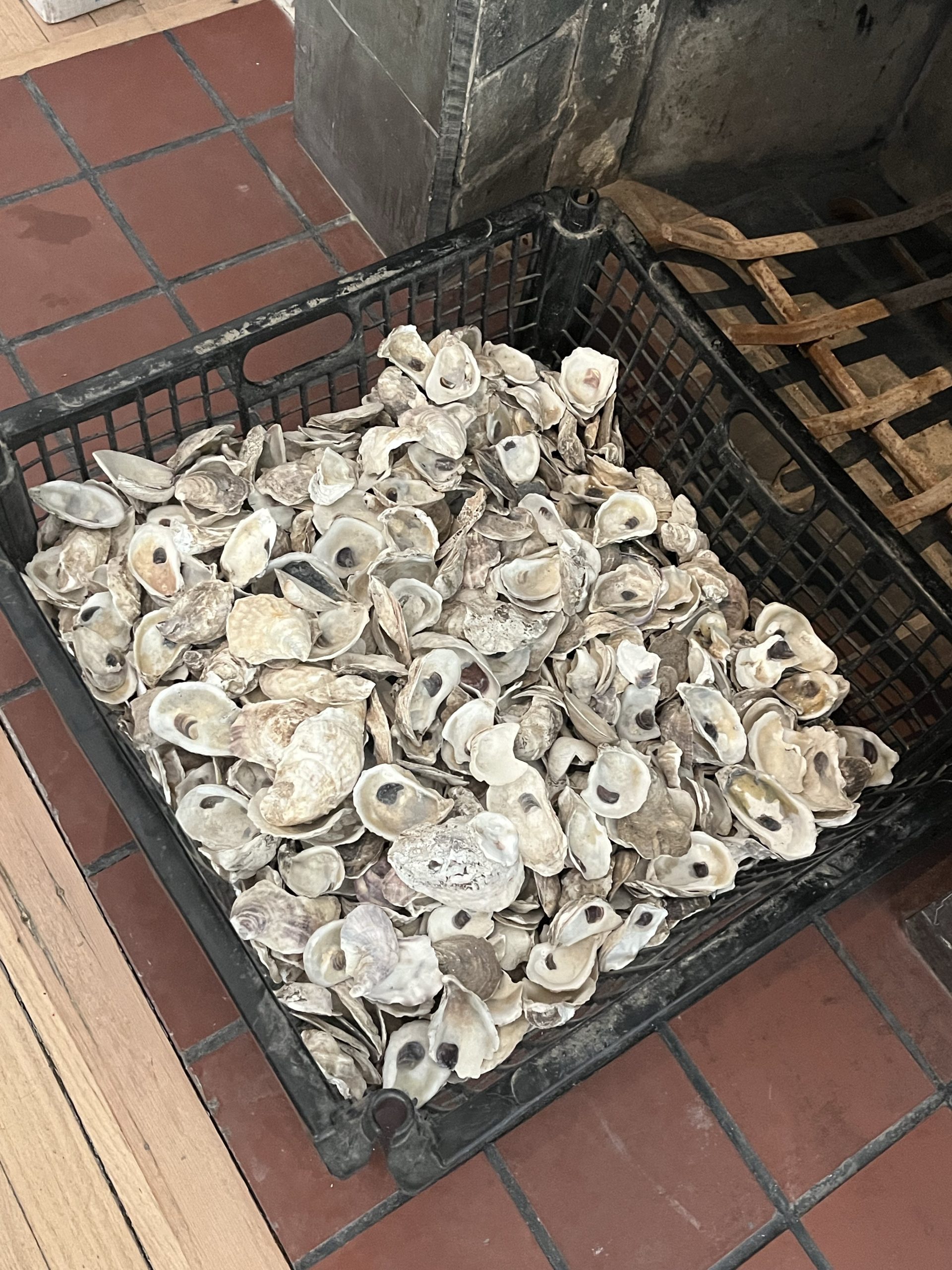
Stephanie Beaumont, who represented BEE on the team, said: “It was a real privilege to contribute towards this incredibly important and impactful project. The volunteer team helped to recycle oyster shells following a fully circular strategy. The shells, when returned to the harbor, will mimic the complexity of natural oyster reefs, creating a fully self-sustaining oyster population. It was absolutely fascinating to learn about the rich history and heritage of oysters in New York City. Before NYC was ‘The Big Apple’ it was commonly known as The Big Oyster. And it was meaningful to contribute towards Greenbuild’s aim to leave a permanent, equitable, and sustainable impact upon its host city.”
From Metrics to Meaning
The numbers are striking: one billion oysters, 50 gallons filtered per oyster per day, 200 million already restored. But the real significance is what those figures represent. A harbor floor that was effectively barren is now a habitat. A coastline that relied mainly on seawalls and hard infrastructure now has a biological buffer that improves over time.
For BEE, the morning was a reminder that engineering credibility also means showing up for the ecosystems our buildings depend on. Greenbuild often focuses on materials, systems, and certifications. The Legacy Project adds another dimension: the landscape and water systems that surround the built environment.
Looking Ahead
Greenbuild 2026 will bring thousands of building professionals to New York. The Legacy Project gives that gathering a physical footprint in the harbor, one that will continue filtering water and absorbing wave energy long after the sessions end. The morning on the water was a chance to put a larger principle into practice: the best sustainability work is specific, measurable, and grounded in place.
The Billion Oyster Project is not BEE’s own initiative. It is a civic and scientific effort that benefits the city where we work. Supporting it is one way to connect the technical work we do in buildings to the natural systems that make cities habitable.